Publications
- Yuan Qi Ni, Dae-Sik Moon, Maria R. Drout, Youngdae Lee, Patrick Sandoval, Jeehye Shin, Hong Soo Park, Sang Chul Kim, Kyuseok Oh, "Infant Type Ia Supernovae from the KMTNet I. Multi-Color Evolution and Populations", submitted (Aug. 12, 2024: arXiv:2408.06287) to The Astrophysical Journal (ApJ).
- Dae-Sik Moon, Ernest Chang, Patrick Sandoval, Mathew Leung, Yuan Qi Ni, Maria R. Drout, Santiago González-Gaitán, Hong Soo Park, Youngdae Lee, Sang Chul Kim, "KSP Core-Collapse Supernova from NGC 7090", in preparation.
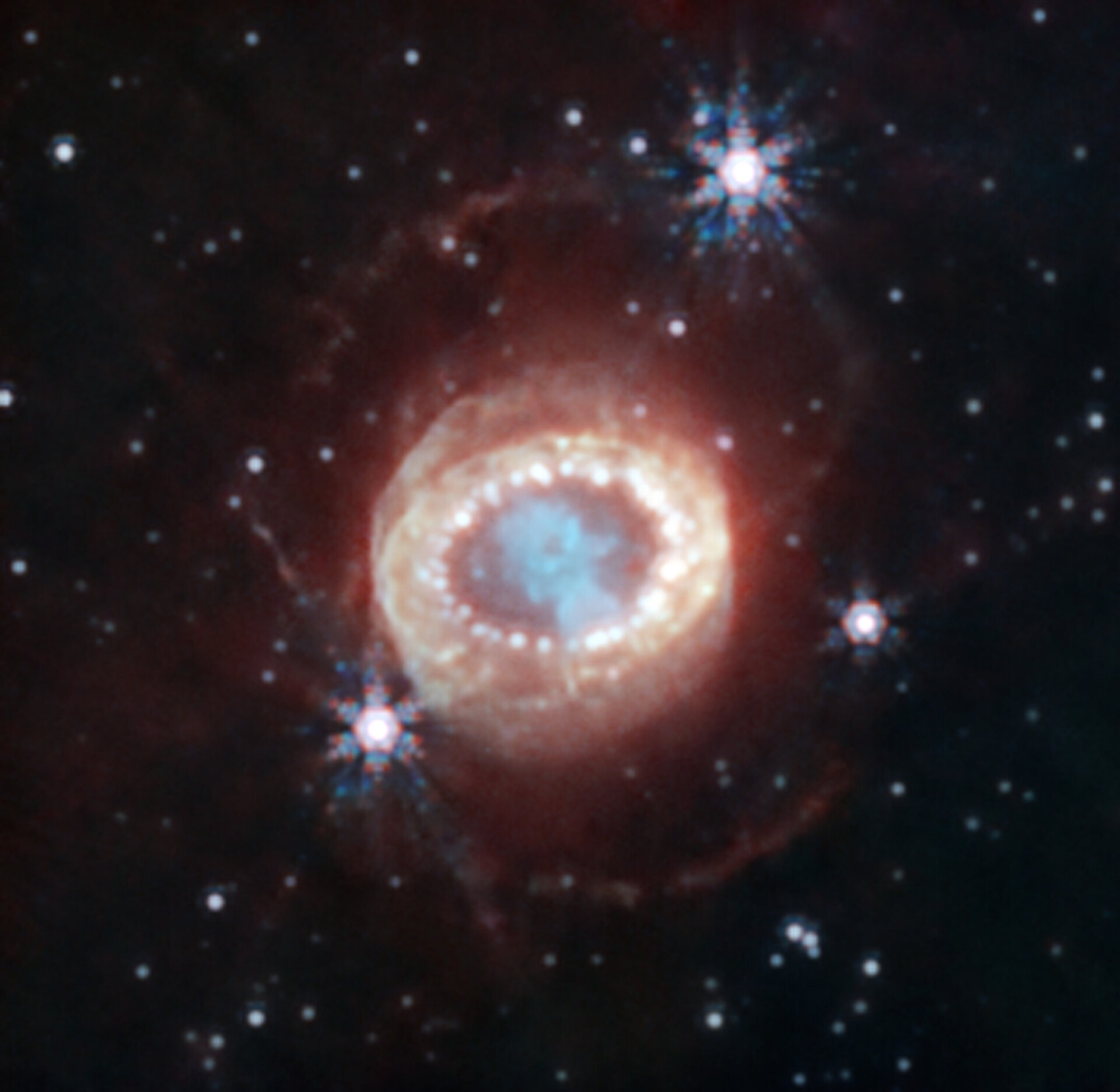
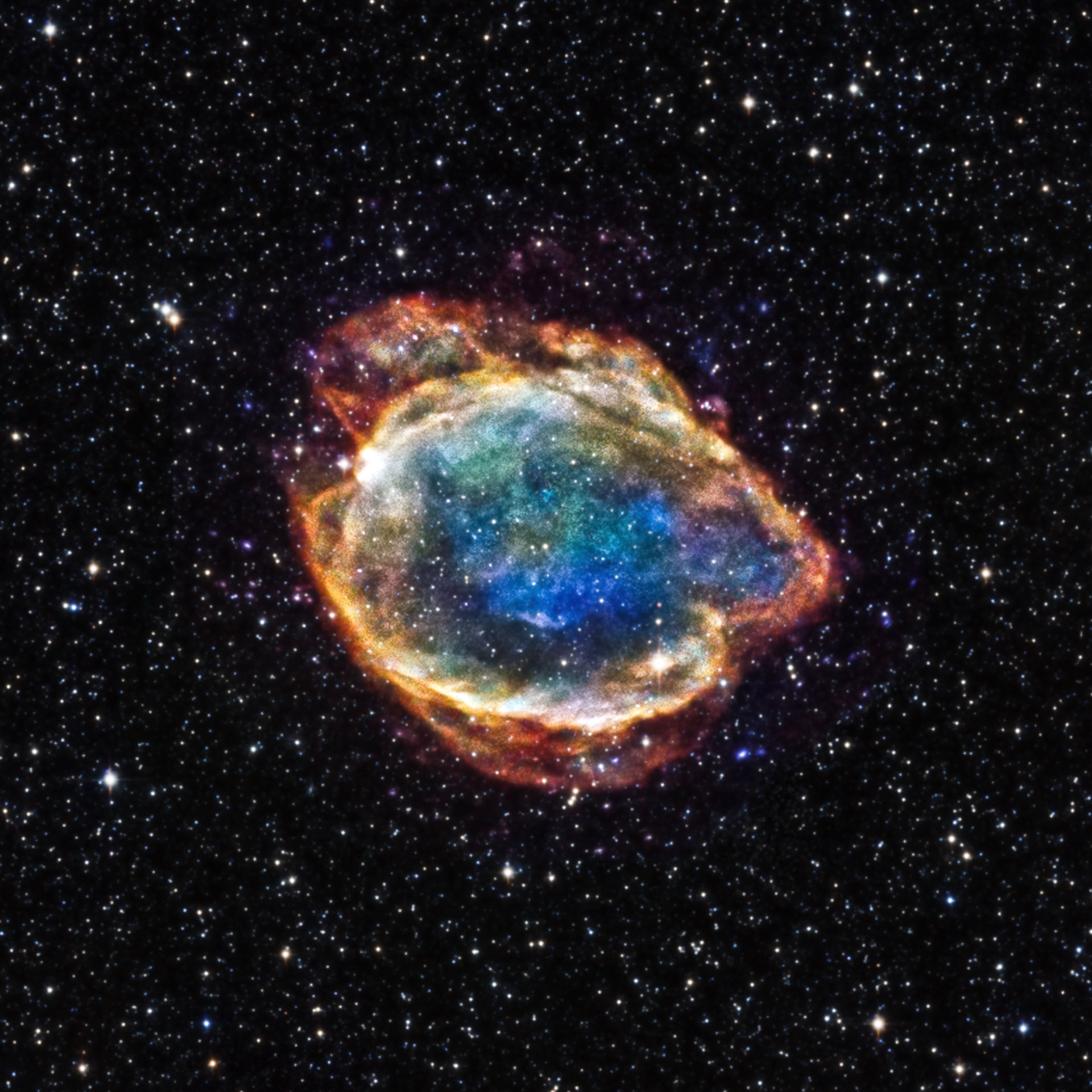
The Story of Core-Collapse Supernova
At the end of hydrostatic burning, a massive star consists of concentric shells that are the relics of its previous burning phases (hydrogen, helium, carbon, neon, oxygen, silicon), with iron being the final stage of nuclear fusion. This last element has the highest nuclear binding energy per nucleon, any further reactions to create heavier nuclei are endothermic and hence impeded. At this point, the iron core is supported against gravity by electron degeneracy pressure, but as more iron is produced through fusion the mass of the core increases to a critical limit.
When this critical limit is exceeded the electron degeneracy pressure can no longer stabilize the core and it collapses. This collapse will continue until it is limited by the strong nuclear force, which rebounds the falling inner core and send a shock wave outward in a process called the “bounce”. This outward moving shock will crash supersonically into the outer material that is falling, which stalls the shock wave, becoming an accretion shock. In an observable supernova explosion, which is ultimately observable, this stalled shock can continue moving outwards through some mechanism. This mechanism is still uncertain and is an active problem in current supernovae research.
KSP-ZN7090-2020f
The manuscript for this supernova is still in preparation, so we are unable to share too many details about this peculiar event. However, there are some notable features worth discussing. This supernova is highly luminous and exhibits strong ionized hydrogen features. This is particularly interesting because we believe the shock from the supernova is ionizing the circumstellar material (CSM), leading to a narrow feature superimposed on a broader H-alpha emission line.
The observed BVi light curves suggest that the powering mechanism in the early stage is likely a shock breakout rather than radioactive decay. However, the late-stage tail phase is unusually luminous, indicating the presence of significant radioactive material at this stage. We have also characterized the supernova as a Type II-L, which implies insufficient hydrogen recombination in the envelope and thus the absence of a plateau phase.
We have attempted to use several analytical shock breakout models to determine the progenitor and explosion parameters of this supernova. However, due to the high luminosity and short rise time, many of these models fail to yield physical parameters or good fits. It appears that the presence of CSM must be considered to accurately model this extreme behavior.
Type Ia SN Color Characterization
We conducted a systematic analysis of the early multi-band light curves and colors of 19 Type Ia Supernovae (SNe) from the Korea Microlensing Telescope Network SN Program. Our findings revealed three distinct populations of Type Ia SNe based on their color evolution and other characteristics, suggesting potential differences in their production channels.